Friday, November 6, 2009

Why are immigrants dying in government institutions in New England?

So it's easy to judge foreign countries for their unjust treatment of people, but what's going on in our own neck of the woods? Well, immigrants who get detained by US Immigration and Customs Enforcement have an odd habit of dying because they are denied medical care. Juan Pedro Tavarez is the most recent case.

Here's the story in the Boston Globe.

The ACLU has been reporting on this case. They write:

Mr. Tavarez' death brings to at least 105 the number of known deaths in ICE custody since 2003, including the death of Vincent Murphy in Boston in 2006. Then, ICE found that his death was a result of a heart condition, despite the fact that other detainees had reported that Murphy "was coughing blood" and notified staff of his illness, who were "not willing to listen."
More from the ACLU here.

Thursday, November 5, 2009

Maine

Sigh I knew I said I would shut up, but I really lied. I am a resident of Maine, so I'm pretty upset about question 1... So apparently this is what the ultimate goal is. I thought it was interesting how they used the word "human rights" instead of "civil rights" which is why I felt the need to post this here.

http://www.maine.gov/sos/cec/elec/pets02/prosexorient.htm

Wednesday, November 4, 2009

Sex with Animals


OK, so here's a guy who just got sentenced to three years in prison for having sex with a horse. This is South Carolina, USA.

So what issues come up here? Well, of course there are the animal's rights.Presumably the animal didn't give consent. But on the other hand, it's actually legal to kill a horse--or any other animal--without its consent. And eating animals is legal too. So why the focus on having sex with an animal? Presumably because of what it says about the person who would do that.

So is having sex with an animal worth three years in prison? If you read the article, you'll see that the perpetrator is a 50-year-old black man with a history of mental illness--do we think that it's a coincidence that no one else has been charged with having sex with an animal in several years? So is there an issue of unequal enforcement of the law? Is there the possibility of racial discrimination, age discrimination, sex discrimination, discrimination on the basis of mental health? According to Kinsey, it's actually pretty common for people to have sex with animals, so why don't we read about this kind of thing more often?

And even if the law were enforced equally, is it possible that a sentence of three years is a cruel and unusual punishment?

Updates on Iran

The New York Times has a couple of articles on Iran today.

One is more historical--about how many of the leaders of the 1979 rebellion against the Shah are now considered enemies of the state. That would fit in well with Satrapi's narrative.

The other is also about the uses and abuses of history--they are celebrating the 30th anniversary of the take-over of the American embassy in 1979, but various sides are trying to use this memory to their own advantage.

Religious Symbols and Human Rights


We've seen repeatedly how the intersection of religion and human rights can be as messy as Kelley Square. Should veils be prohibited or allowed? Is the requirement to wear a veil a significant human rights violation or just a conservative dress code, no different in principle from the requirement that women cover their breasts?

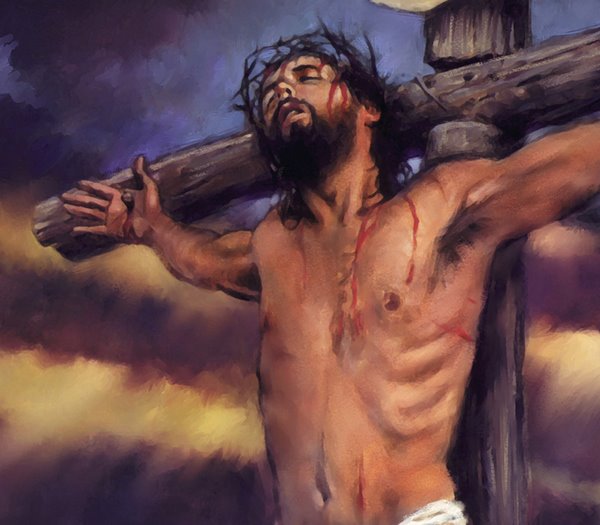
Well these issues don't just come up with Islam. The European Court of Human Rights has just issued a ruling against crucifixes in Italian classrooms. As we know from the United States, rulings against Christian religious symbols create an uproar--and Italy is no different.

Here's the article.

I wonder if An-Na'im's article on Islamic law and human rights could provide us with some insights here.

Monday, November 2, 2009

Human Rights Watch

I swear I'll shut up eventually, but I found this article and thought it was relevent and interesting. I think it shows both sides of the Burqua arguement (to ban, to force, or to find a happy medium) very well, but in the end supports the right to chose. I swear I'll stop posting so much!!!! I just really liked this article and had never heard of the Human Rights Watch Organization before...

http://www.hrw.org/en/news/2009/07/02/beyond-burqa

Sunday, November 1, 2009

An Interveiw With Marjane Satrapi

So I was poking around online and came accross this interveiw with Marjane Satrapi, she talks a about the book, Iran, influences, etc. I think it's a pretty good insight to her mind. So here is the link to the interveiw:

http://www.bookslut.com/features/2004_10_003261.php

I think it was particularly interesting when she spoke about not truely having a home. When coming here, people always ask me where I am from, and it is kind of an awkward question, I grew up in Maryland, Maryland still feels like my home, but I live in Maine now, I've lived in Maine for the last 2 years and I love it, but it doesn't feel like home. Of course my feelings are not really comprable to Satrapi's. I was forced to leave Maryland because my father got a job in Maine and my parents weren't going to leave me behind, not because Maryland was in any sort of turmoil that put me into danger. I can go and visit pretty much whenever I please (funds permiting) and the culture of Maryland and the culture of Maine are not that different. Satrapi is expiriencing a more intense sense of "homelessness" because she cannot go back and visit Iran, France and Iran are almost opposites culturally (she talks about how in Iran it is required to wear the veil and in France it is illegal to wear the veil in school) and her family is still in Iran. I really liked how she described Iran as her mother and France as her spouse. She loves them both, but it is a different kind of love.

It was very interesting what she said about fighting against the veil and now fighting for it. By forcing these girls not to wear the veil at school, many stop going to school and this alienates them which doesn't end persecution. Having been in a situation where she was forced to do something against her will (such as wear the veil) she understands how it is about trying to find identity in a country whose ideology may not reflect their own.


Oh and I also found this image (I know it's in French, but the pictures still say a lot) of the different kind of veils, that I thought was interesting